


Behavioral Dog Training in New Jersey
Personalized in-home training plans for dogs dealing with reactivity, aggression, stranger danger, and anxiety.

All programs begin with a consultation — text “dog training” to 908-246-6187 to get started!
Advanced Support, Every Step of the Way
Rose Dog Training's behavior modification services go beyond basic obedience. This is specialist-level work — designed for dogs whose reactions are intense, disruptive, or rooted in fear, and for owners who have tried other approaches and still feel stuck.
Behavioral dog training in NJ through Rose Dog Training is led by Rylee Rose, CPDT-KA, FDM — a certified professional dog trainer and Family Dog Mediator who has also completed the Aggression in Dogs Master Course. Every program is driven by holistic LEGS (Learning, Environment, Genetics, and Self) approach following LIMA (Least Intrusive, Minimally Aversive) methodologies, meaning training plans always consider each and every variable that could contribute to unwanted behaviors, while targeting the underlying emotion driving the behavior — not just the symptom on the surface.
The goal isn't just for a dog to behave better in a controlled setting. It's a dog that genuinely feels better about the situations that used to send them over the edge — and an owner who knows exactly what to do when those situations arise.
What Behavioral Dog Training Programs Include
Every behavior modification program at Rose Dog Training is built around the individual dog and owner. No two programs are identical, because no two dogs are identical. Here's what's included across all program lengths:
1, 2, or 3 months of personalized in-home behavioral dog training — program length is determined during the initial consultation based on the dog's specific needs and history.
Phone support throughout the program — a question is just a text away, so there's no guessing between lessons.
Unlimited video reviews — owners send videos of their training between sessions and receive direct, personalized feedback. No waiting until the next lesson to find out if something's working.
Personalized homework — written guidance to reference throughout the week so owners feel confident they're training correctly every single day.
Access to a helper dog — for dogs with dog-directed reactivity or aggression, a trained helper dog is available as a controlled training partner.
Field trips as the dog progresses — real-world exposure in public spaces so the training transfers outside the home. Confidence gets built where it actually needs to exist.
Hybrid virtual/in-person program option — available specifically for dogs with stranger danger. This approach is actually more effective than in-person-only for this population (see below).
Who Behavioral Dog Training Is For
This program is designed for dogs experiencing intense reactions — not mild frustrations. If any of these describe a dog, behavioral dog training is likely the right fit:
Reactivity toward other dogs, people, or moving objects — lunging, barking, spinning on leash, or losing control when a trigger appears
Aggression directed toward people or other dogs — growling, snapping, or biting- has owners on constant alert
Predatory behavior toward cats or small animals in the home
Stranger danger — dogs who are fearful, reactive, or aggressive specifically toward unfamiliar
Intense anxiety — generalized anxiety, fear responses, or separation distress that prevents a dog from functioning calmly in daily life
If a dog's behavior falls into one of these categories, the standard obedience programs aren't the starting point. Behavioral dog training addresses what's actually going on underneath — the emotional state that's producing the behavior — and builds new associations from there.
The Hybrid Virtual/In-Home Program: Why It Works for Stranger Danger Dogs
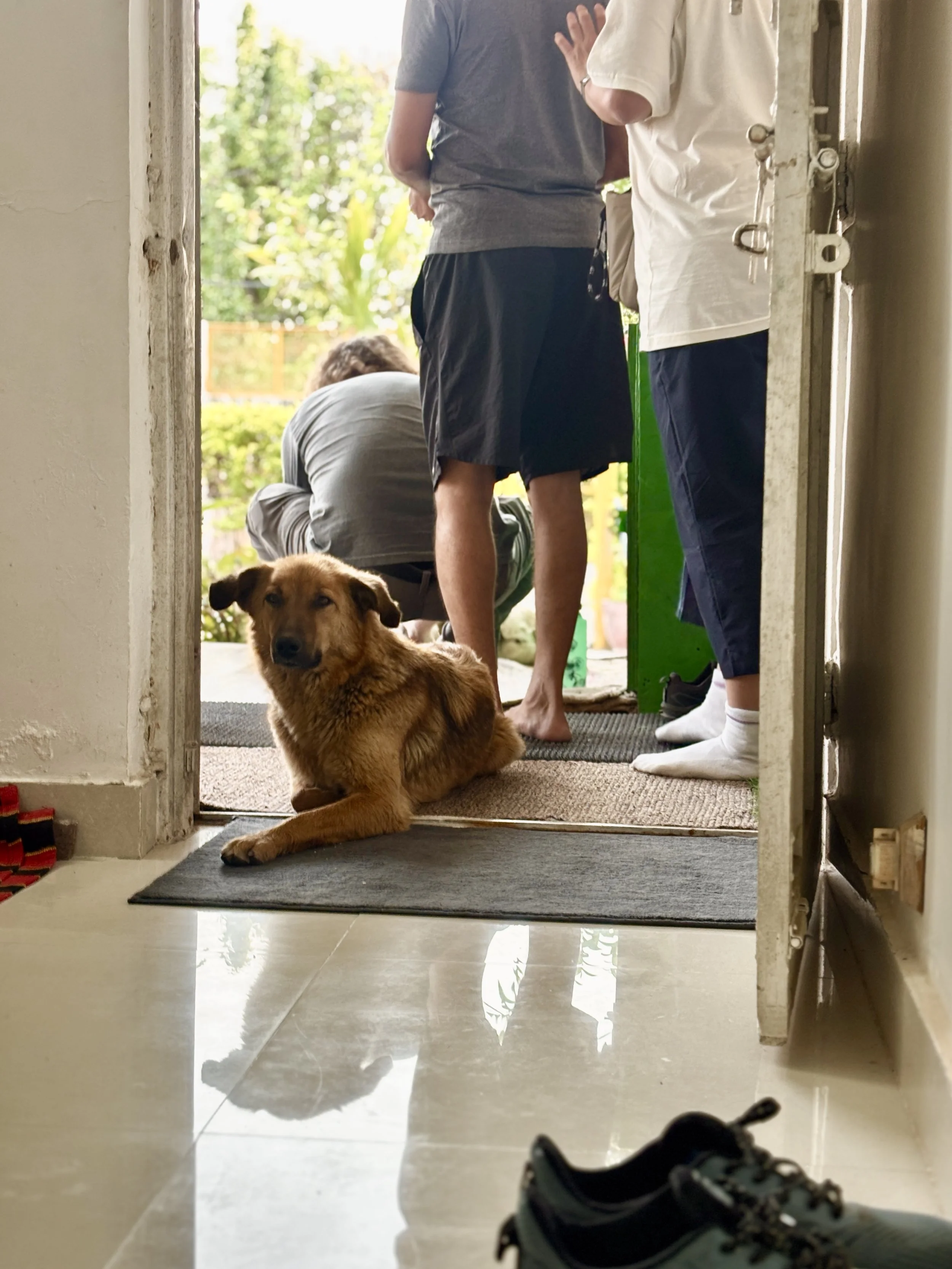
Dogs with stranger danger present a unique training challenge. Bringing an unfamiliar trainer into the home — the dog's most important safe space — triggers the very stress response the training is meant to address. The dog is too activated to learn, and the owner is left managing the dog instead of working with them.
Rose Dog Training's hybrid virtual/in-person approach solves this by doing the foundation work remotely first. Through virtual sessions, the owner and dog build the full skill set they need before any in-person work begins. By the time in-person lessons start, the dog is prepared, the owner is confident, and the sessions are productive from the first minute.
This isn't a compromise. For stranger danger dogs specifically, the hybrid model produces better outcomes than strictly in-home sessions — and it's an approach no competitor in the Long Valley or Morris County area offers.
What to Expect: The Consultation
Every behavioral dog training program begins with a consultation. This is where Rylee gets to know the dog — their history, their triggers, their living environment, and what daily life looks like for the owner. Based on that conversation, she'll recommend the program length and structure that best fit the situation.
The consultation also gives owners a chance to ask questions, share past training experiences (good and bad), and understand exactly how the program will work before committing to anything. There's no guessing and no pressure.
Text “dog training” to 908-246-6187 to get started!
Frequently Asked Questions
-
Dogs dealing with reactivity, aggression, anxiety, fear responses, predatory behavior, or stranger danger are the primary candidates for behavioral training. These are dogs whose reactions are rooted in emotional states — not just gaps in obedience — and who need a specialist approach rather than standard manners training.
-
The key difference is intensity and emotion. If a dog pulls on the leash out of excitement, that's obedience. If a dog lunges, barks uncontrollably, or shuts down completely at the sight of another dog or a stranger, that's a behavioral response. During the consultation, Rylee evaluates where a dog falls and recommends the right program.
-
Programs run 1, 2, or 3 months, depending on the dog's needs and what owners want to accomplish. The consultation determines the recommended length. Most behavioral cases — especially reactivity and anxiety — require time and consistency, and the program length reflects what it takes to create lasting change rather than a quick patch.
-
Yes — all sessions are conducted in the client's home, which is where behavioral challenges tend to be most relevant. For dogs with stranger danger, a hybrid virtual/in-person option is available and often yields better results than strictly in-home work for this population.
-
This is one of the most common situations Rose Dog Training works with. Past training attempts — whether YouTube videos, group classes, or another trainer — often focus on suppressing behavior rather than addressing its emotional root. The LIMA-based approach used here targets the underlying emotion, which is why results tend to stick in a way previous training didn't.
About the Programs
About the Training Approach
-
LIMA stands for Least Intrusive, Minimally Aversive. It's a science-based training philosophy that prioritizes the dog's emotional well-being alongside behavioral outcomes. In practice, it means every technique chosen is the least stressful option that will still be effective — no punishment, no force, no flooding a dog with their triggers.
-
Reactivity typically refers to an exaggerated emotional response — barking, lunging, spinning — that's rooted in fear, frustration, or over-arousal. Aggression involves behaviors like growling, snapping, or biting that signal a threat. The two often overlap, and some reactive dogs can escalate to aggression. Both respond well to behavioral training when the emotional root is addressed correctly.
-
Rylee has completed Michael Shikashio's Aggression in Dogs Master Course — one of the most rigorous specialist credentials available in this area. Rose Dog Training regularly works with dogs who have bite histories, dog-to-dog aggression, or human-directed aggression. Every case is evaluated individually during the consultation.
-
For most sessions, yes — teaching the owner is as important as training the dog. Rose Dog Training's approach is explicitly built around giving owners the skills and confidence to maintain progress between lessons and after the program ends. That said, trainer-led sessions are available as part of select programs when owners need a break or want the trainer to work directly with the dog.
-
Three things stand out. First, the credential stack: CPDT-KA, FDM, and Michael Shikashio's Aggression in Dogs Master Course — a combination no direct competitor in Morris County or Somerset County holds. Second, the hybrid virtual/in-person model for stranger danger dogs — a clinically superior approach that no other local trainer offers. Third, the helper dog: for dog-reactive cases, having a trained, controlled training partner available on-site accelerates progress in a way that generic session work can't.
-
The consultation is a full assessment of the dog's history, triggers, living environment, and the owner's goals. Rylee uses this information to recommend the program length and structure that fits the situation. Owners leave the consultation with a clear picture of what the program involves and what to expect. There's no obligation to proceed on the spot.
-
Program investment varies based on length (1, 2, or 3 months) and the specific needs identified during the consultation. Rose Dog Training doesn't publish flat pricing because behavior modification is never one-size-fits-all. Consultations are always $200 and is the right first step to get an accurate picture of what the program will involve for a specific dog.
-
Rose Dog Training provides in-home behavioral dog training throughout Long Valley, Chester, Basking Ridge, Bridgewater, Somerville, and the surrounding areas of Morris and Somerset counties in New Jersey.
-
Text "dog training" to 908-246-6187 or fill out the contact form to get started. Rylee responds quickly, and availability is discussed directly from there.
-
No — the hybrid model for stranger danger dogs begins with virtual sessions to build the foundational skill set, then transitions to in-person sessions once the dog and owner are prepared. The virtual phase isn't a permanent substitute for in-person work. It's a strategic starting point that makes the in-person sessions far more productive.
About Getting Started
Why Choose Rose Dog Training
Rose Dog Training's approach to behavioral dog training is built on one principle: listen to the dog. Behaviors like lunging, snapping, growling, and shutting down are symptoms. The underlying emotion — fear, frustration, anxiety — is the real target.
Rylee Rose, CPDT-KA, FDM, brings a combination of credentials and real-world specialist experience that's genuinely rare in this market:
CPDT-KA — Certified Professional Dog Trainer through the Certification Council for Professional Dog Trainers (CCPDT), the most widely recognized credential in the industry
FDM — Family Dog Mediator, a specialist designation focused on bridging the gap between the dynamics of being a dog and being a human.
Aggression in Dogs Master Course Graduate — one of the most respected aggression-specific training credentials available
Holistic, Science Based Framework — looking at the entire picture — Learning, Environment, Genetics, and Self, while following LIMA (least intrusive, minimally aversive) training methods.
Specialist Tools — helper dog for reactive cases, hybrid virtual/in-person model for stranger danger dogs, and unlimited video review between sessions
What New Jersey Dog Owners Are Saying
More reviews are available from Long Valley and Morris County dog owners at the Rose Dog Training reviews page.
Get Started With Behavioral Dog Training in New Jersey
Ready to stop managing and start resolving?
Text "dog training" to 908-246-6187 or fill out the contact form to schedule a consultation and get a clear picture of what behavioral dog training can do for a dog.


Serving Dog Owners Across New Jersey
Rose Dog Training provides in-home behavioral dog training throughout: